To understand contemporary craft spirits, one must look back at the historical evolution of Polish mead and winemaking traditions. Our country, situated in a unique climatic zone, developed a singular culture of mead-making that for centuries defined the prestige of Polish feasts. While grape wine and mead coexisted on the tables, it was the latter that became synonymous with the native mastery of fermentation.
Why Mead Outmatched the Grape?
In the Middle Ages, viticulture in Poland faced numerous barriers. As Magdalena Tomaszewska-Bolałek points out in The Culinary Traditions of Poland, the harsh climate made it impossible to produce wines as exquisite as those from Southern Europe. Due to a lack of skilled vineyard specialists and the prudence of rulers (mead was harder to poison unnoticed than wine), mead became the “Drink of Kings.” While the 14th century brought increased urban investment in vineyards, the golden age of native winemaking lasted only until the 16th century.
Technological Classification of Meads
The foundation of mead knowledge lies in the proportions of the must (the mixture of honey and water). These ratios determine not only the flavor but also the collector’s value of the spirit. We distinguish four main categories:
-
Półtorak – Composed of one part honey and half a part water. This is the most noble variety; due to its density and high sugar content, it must mature for 9 to 10 years.
-
Dwójniak – A 1:1 ratio. A sweet, essential mead that ages for approximately 4 years.
-
Trójniak – Made from one part honey and two parts water. This is the most balanced type, often preferred by those who appreciate fruit infusions.
-
Czwórniak – The driest variety, with a 1:3 ratio, characterized by its lightness and the shortest aging period.
Forgotten Fruit Wines and the Role of Additives
When analyzing how the history of Polish mead and winemaking traditions evolved, the role of local fruits cannot be overlooked. For centuries, attempts were made to produce wines from berries, currants, or cherries, though the technology of the time did not always yield a stable product.
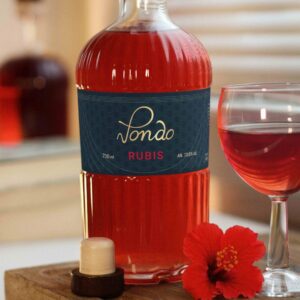
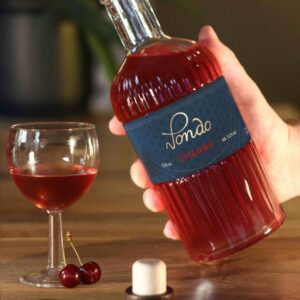
The tradition of seasoning meads and wines with spices and fruit juices served two purposes: enhancing the aromatic profile and preservation. Today, these historical experiments inspire product lines such as our blackcurrant wines, which combine ancient wisdom with modern fermentation control.
The Symbolism and “Sacrum” of Bee Products
In folk culture, honey was much more than just a food product; it was believed to possess magical, protective properties. Honey blessed on St. Agatha’s Day was thought to shield households from fire, while rubbing it on livestock was meant to ward off evil spells. This profound respect for the raw material ensured that Polish mead-making was always rooted in quality rather than quantity—a principle that remains the bedrock of today’s premium segment.
A Return to the Roots
The modern renaissance of craft is nothing less than a return to the times when the history of Polish mead and winemaking traditions were a source of national pride. By choosing spirits crafted according to ancient proportions, you are not only supporting the local economy but, above all, preserving an invaluable culinary heritage.
Bibliography:
-
Excerpt from the book: Alkohole, p. 1 – analysis of the fermentation process and classification.
-
M. Tomaszewska-Bolałek, Culinary Traditions of Poland, Warsaw 2023, pp. 203, 285-300.